Freelancing unlocks the ability to work from everywhere, set your very own hours, and pick your clients. What it doesn’t do is make taxes easy. Whilst you’re a faraway freelancer, you end up with your personal accounting department. No company is withholding taxes on your behalf, no HR group is handing you a W-2 at 12 months’ end, and no one is contributing to your Social Security but you. The coolest information: with a chunk of structure, coping with your taxes becomes one of the more conceivable elements of running your freelance enterprise. Right here’s how to do it right.

Apprehend Your Tax Duties First
Earlier than anything else, you need to recognize what you clearly owe. As a self-employed freelancer, you are subject to 2 layers of tax: profits tax and self-employment tax.
Self-employment tax covers Social Security and Medicare contributions. Conventional employees break up this value with their organization — every pays 7. sixty five%. As a freelancer, you pay both halves: 15.three% on internet earnings. That range shocks many new freelancers. The essential element to realize is that you may deduct half of this self-employment tax when calculating your adjusted gross earnings, which softens the blow slightly.
On top of that, your freelance earnings are subject to federal (and regularly country) earnings tax, calculated at your marginal tax rate primarily based on overall earnings. Unlike salaried personnel, no person is taking this from your paycheck mechanically — that is why quarterly estimated taxes exist.
Pay Quarterly anticipated Taxes
One of the most essential things a freelancer can construct is paying quarterly estimated taxes. The IRS calls for you to pay taxes as you earn earnings for the duration of the yr, not just in April. If you wait until tax season to settle up, you may face underpayment consequences.
Predicted tax deadlines normally fall in mid-April, mid-June, mid-September, and mid-January (overlaying the earlier year’s q4). Mark these dates for your calendar and deal with them like another invoice.
To calculate what you owe every area, use the safe harbor rule: pay both one hundred % of your ultimate yr’s total tax liability (and 110% if your earnings surpassed $150,000), or ninety% of your contemporary yr’s estimated tax. Both techniques protect you from penalties even if your real bill turns out better.
a practical technique: set aside 25–30% of each fee you acquire into a dedicated savings account. This becomes your tax fund. Whilst quarterly closing dates arrive, you may have the money ready — no scrambling, no strain.
Track every business fee
Freelancers are entitled to deduct everyday and vital enterprise costs from their taxable income. This is one of the most effective tools available to you, and failing to song prices means leaving actual cash on the desk.
Deductible costs usually encompass:
- home office deduction — if you have a dedicated workspace used completely for a commercial enterprise, you could deduct a portion of your rent or mortgage, utilities, and net.
- device and software — Laptops, monitors, cameras, subscriptions to gear like design software, project control apps, or cloud storage are commonly deductible.
- expert development — online guides, books, workshops, and conference expenses associated with your area count.
- medical insurance charges — Self-hired humans can often deduct 100% of health insurance charges paid for themselves and their households.
- Retirement contributions — Contributions to a SEP-IRA or Solo 401(k) are deductible and decrease your taxable income drastically.
- commercial enterprise tour and customer food — whilst the journey is exactly for business purposes, maximum fees are deductible. Food with clients are 50% deductible.
Use accounting software like Wave, FreshBooks, or QuickBooks Self-Employed to log charges routinely. Join your business financial institution account and credit card, and categorize everything in real time. Reconstructing a yr’s worth of prices in March is painful and error-prone — ongoing tracking is a long way advanced.
Separate your price range
Open a committed commercial enterprise checking account and use it solely for freelance earnings and enterprise costs. This single addiction makes tax education dramatically easier. It creates an easy document of commercial enterprise hobby, simplifies fee tracking, and allows you to avoid the nightmare of sorting private and expert transactions come submission time.
While you’re at it, remember a business credit card for routine commercial enterprise costs. The statements serve as integrated expense reports and regularly come with rewards on classes freelancers spend heavily on, like software, travel, and office supplies.
Plan for Retirement (and reduce Your Tax invoice simultaneously)
One underused gain of self-employment is getting access to effective retirement debts that also reduce your taxable income today.
A SEP-IRA lets you make contributions up to twenty-five % of net self-employment profits, with a maximum of $69,000 in 2024. A Solo 401(ok) lets in even better contributions for individuals who maximize their earnings. Both are pre-tax contributions, meaning every greenback you put in reduces the profits on which you’re taxed this 12 months. It’s one of the simplest tax techniques available to freelancers, but many skip it.
Start small in case you need to. Even contributing a modest quantity builds the addiction and grants an immediate tax benefit.
Work with a Tax professional
Even the most financially savvy freelancer benefits from running with a CPA or tax expert — especially one who specializes in self-employment or small organizations. Tax law modifications often. Deductions are nuanced. An expert can become aware of possibilities you’ll miss for your very own and ensure you’re compliant with state tax rules, which vary broadly, especially if you’ve worked throughout more than one state or served international clients.
The cost of hiring an expert is, itself, a deductible business rate. In many instances, the savings they find exceed their rate.
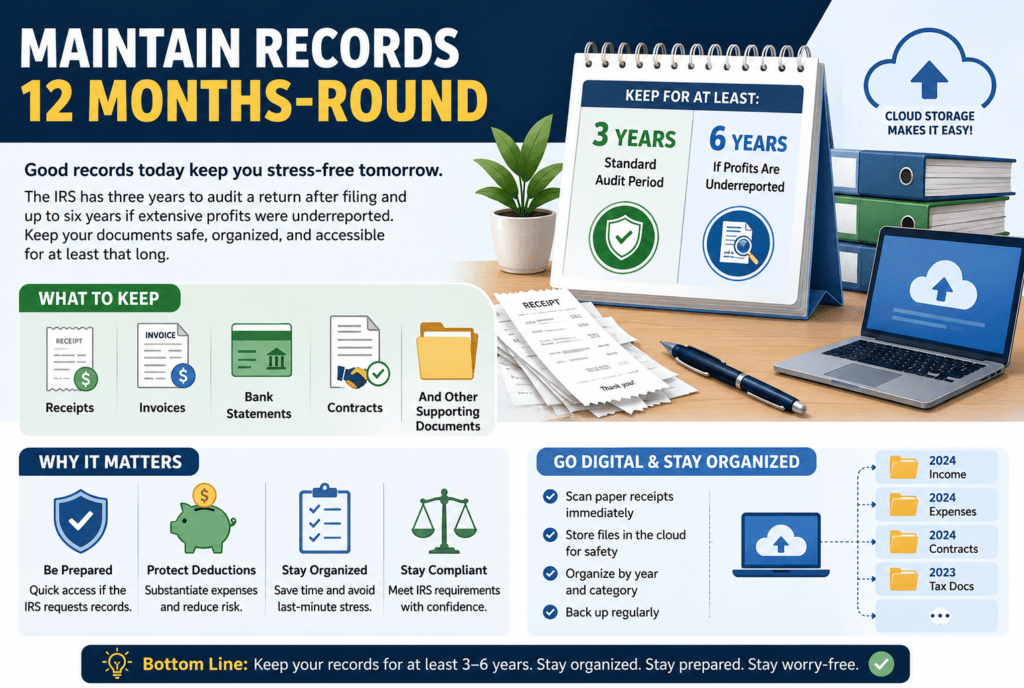
Maintain records 12 months-rounds
The IRS has three years to audit a return after filing and up to six years if extensive profits were underreported. Preserve receipts, invoices, bank statements, and contracts prepared and on hand for at least that long. Cloud storage offerings make this painless — test paper receipts without delay and maintain virtual folders organized by means of year and category.
Conclusion
Conclusion
Taxes as a freelancer are not inherently more complex — they are simply an extra guide. The freelancers who struggle are people who deal with taxes as an annual surprise instead of an ongoing process. Set aside income as you earn it. track prices in real time. Pay quarterly. Put money into retirement money owed. And while your state of affairs gets complicated, rent someone who does this for a living.
Construct those costs early, and taxes grow to be just another part of running your business — nothing to worry about, and completely under your control.