Strolling a small enterprise comes with many obligations, and handling taxes is one of the most essential. Many commercial enterprise proprietors focus heavily on increasing income and profits, but frequently forget criminal tax-saving possibilities that could drastically reduce prices. Right tax planning helps small organizations enhance cash flow, reinvest in growth, and avoid monetary strain during tax season.
Expertise in how enterprise taxes work and taking advantage of deductions, credits, and clever financial techniques can make a significant difference. Here are a few practical and effective tax-saving guidelines for small enterprise proprietors.
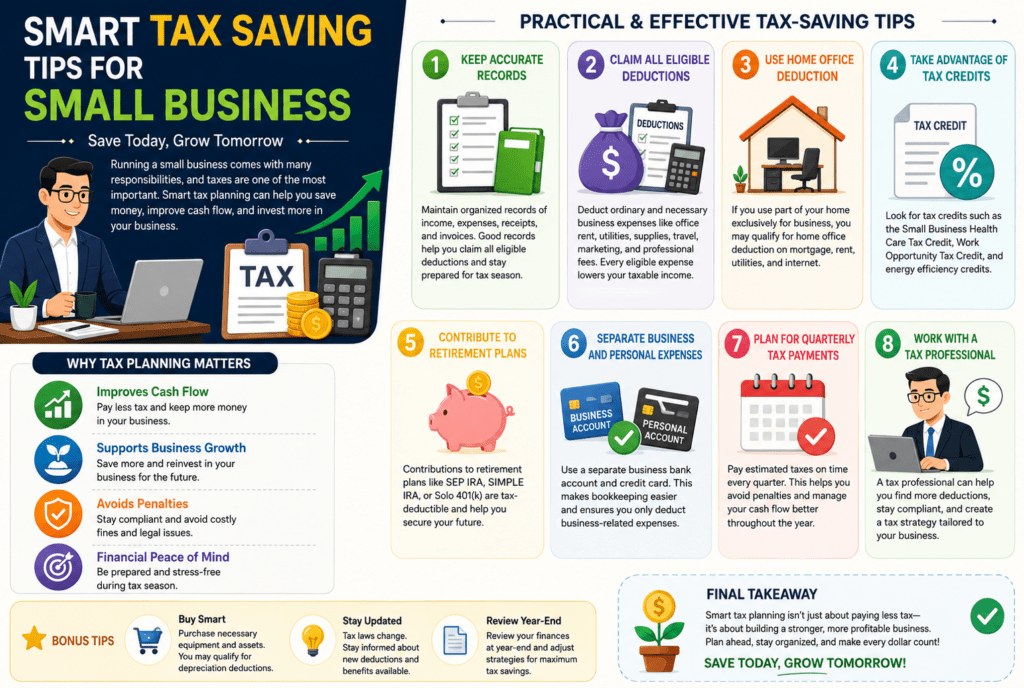
maintain correct economic information
One of the most critical tax-saving habits is keeping organized financial records. Poor bookkeeping can motivate commercial enterprise proprietors to overlook deductions or make submission errors that cause consequences.
Use accounting software program to tune:
- income and income
- commercial enterprise charges
- worker salaries
- software bills
- journey costs
- inventory purchases
- Tax bills
keeping receipts, invoices, and financial institution statements prepared makes it simpler to prove deductions if audited. correct records additionally help business owners recognize where money is being spent and identify areas for financial savings.
Separate personal and commercial enterprise price range
Many small commercial enterprise owners make the error of blending private and commercial enterprise charges. This creates confusion and can lead to rejected deductions at some stage in tax submission.
Open a dedicated enterprise bank account and use a separate credit card for business transactions. This simplifies bookkeeping and ensures that every eligible business cost is well documented.
Separating the budget additionally offers the business a greater professional appearance and makes financial reporting more accurate.
Declare All Eligible Business Deductions
Tax deductions reduce taxable income, which lowers the entire tax bill. Many small businesses fail to claim all available deductions because they may be blind to them.
Common deductible fees consist of:
- office rent
- net and call bills
- advertising and marketing
- worker wages
- office substances
- software subscriptions
- coverage charges
- enterprise tour
- expert services
If a cost is everyday and essential for business operations, it is also deductible. Retaining targeted information guarantees these deductions can be claimed legally.
Take advantage of home office Deductions
If you run your business from a domestic, you can qualify for a domestic office deduction. A portion of your rent, utilities, internet, and upkeep prices may be deducted based on the percentage of your house used solely for business.
For example, if 15% of your own home is used as a dedicated office, you may deduct 15% of eligible family prices.
However, the workspace has to be used regularly and completely for business functions to qualify.
Put money into the enterprise system
Buying commercial enterprise equipment can offer substantial tax benefits. computer systems, printers, workplace furniture, equipment, and different tools required for operations might also qualify for deductions or depreciation advantages.
Rather than delaying vital purchases, enterprise owners can strategically put money into equipment earlier than the tax year ends to lessen taxable profits.
Technology investments can enhance productivity while additionally lowering taxes at the same time.
Lease circle of relatives members Legally
Hiring own family members can sometimes provide tax benefits. For example, using a partner or kids in the commercial enterprise may assist shift earnings into lower tax brackets while maintaining money in the family.
But, circle of relatives participants must perform real work and get a reasonable payment. Right payroll facts ought to additionally be maintained to comply with tax policies.
This strategy can assist in reducing overall tax liability whilst being accomplished effectively.
Make contributions to Retirement Plans
Retirement contributions are one of the smartest approaches to reduce taxes, even as constructing destiny economic safety. Small business proprietors can make contributions to retirement accounts that offer tax benefits.
options may additionally consist of:
- SEP IRA
- simple IRA
- Solo 401(ok)
Contributions to those plans are often tax-deductible, decreasing contemporary taxable earnings. On the other hand, the company proprietor builds long-term savings for retirement.
This creates a double monetary gain.
Track vehicle prices
In case you use a car for commercial enterprise purposes, you can deduct associated costs. These can also encompass:
- fuel fees
- preservation
- coverage
- Parking fees
- Toll costs
Some companies select the usual mileage deduction method, while others use real vehicle prices. Maintaining a mileage log is critical for helping with these deductions.
Most effective commercial enterprise-related travel qualifies, so personal trips ought to be excluded.
Deduct enterprise journey prices
Journey costs incurred for valid enterprise purposes are usually deductible. These can also encompass transportation, resort remains, food, and conference charges.
For example, if you attend enterprise events, client conferences, or trade shows, many related fees may additionally qualify as deductions.
Maintain unique documentation consisting of receipts, travel schedules, and meeting data to guide claims.
Proper planning can flip important business trips into tax-saving possibilities.
Use Tax credits
Tax credits immediately reduce the amount of tax owed, making them more precious than deductions in many cases.
Depending on neighborhood tax legal guidelines, small groups may qualify for credits related to:
- Hiring employees
- research and development
- strength-efficient upgrades
- employee training packages
- medical insurance contributions
enterprise proprietors need to studies to be had credits cautiously or consult a tax professional to ensure they do not miss opportunities.
Select the right commercial enterprise structure
Your business shape impacts how a whole lot tax you pay. Sole proprietorships, partnerships, confined legal responsibility organizations (LLCs), and corporations all have specific tax remedies.
For a few companies, switching to an LLC or enterprise may also lessen self-employment taxes or offer additional deductions.
Choosing the right shape depends on factors, together with:
- business size
- sales
- boom plans
- range of employees
- legal responsibility safety wishes
Consulting a tax advisor can help determine the maximum tax-green shape.
Pay estimated Taxes on Time
Small business owners frequently need to pay estimated taxes throughout the yr as opposed to waiting until tax season. Lacking those payments can bring about penalties and interest expenses.
Placing a portion of profits apart often facilitates avoiding cash drift troubles later. Many enterprise proprietors create a separate savings account specifically for tax bills.
Paying taxes on time not only avoids consequences but also improves economic subject.
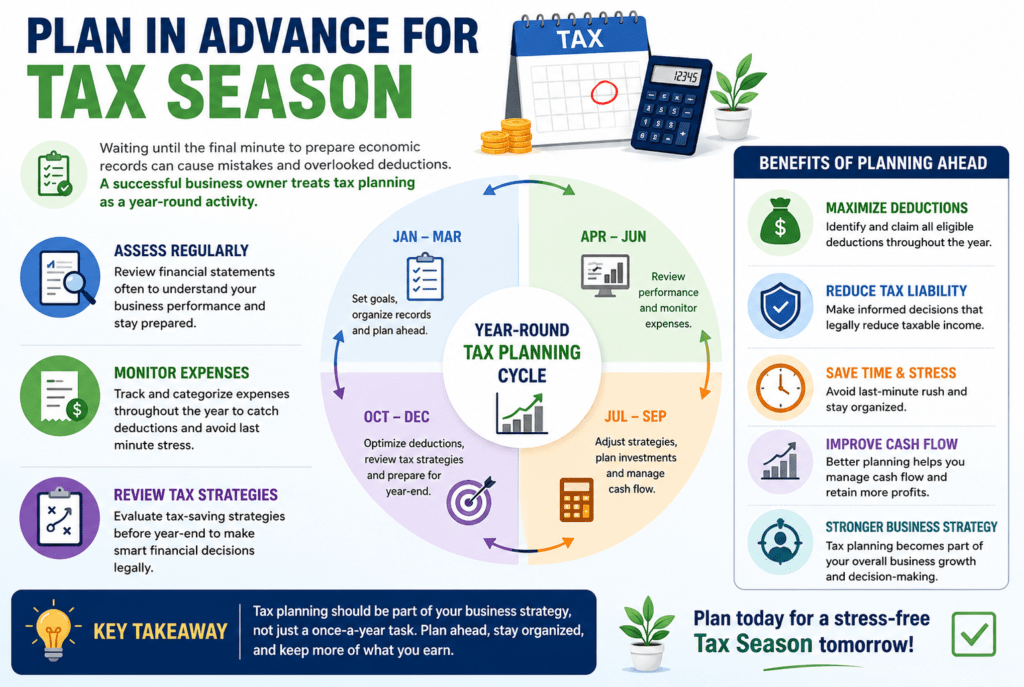
Plan in advance for Tax Season
Waiting until the final minute to prepare economic records can cause mistakes and overlooked deductions. A successful commercial enterprise owner treats tax planning as a 12 months-round activity.
Assessment monetary statements often, screen prices, and evaluate tax techniques before the 12 months ends. This allows time to make clever financial selections that reduce taxable profits legally.
Tax planning needs to turn out to be part of the overall business strategy instead of a as soon as-a-yr assignment.
Conclusion
Saving money on taxes isn’t always about avoiding legal duties; it’s far more about understanding the rules and the usage of them wisely. Small enterprise proprietors who hold prepared records, declare deductions properly, make investments strategically, and plan in advance can drastically lessen their tax burden.
Effective tax control improves profitability, strengthens coins waft, and creates greater possibilities for enterprise boom. Through applying these tax-saving recommendations continually, small business owners can construct more potent and financially stable organizations even as remaining completely compliant with tax legal guidelines.